 92.7
 94.0

Late edition
AvSexUp.cc reporter AI roleplay with a nosy press

Magdalena, 36 AI
at her desk
She keeps three notebooks and lies about two.
Sixteen reporters from an invented tabloid want your side of the story, and they will not stop asking. Choose a headline, pick up when she calls and see how far the interview goes. Each is an AI woman whose portrait and banner were made to be looked at.
- 16reporters and editors, all AI characters
- 4desks, from gossip to the night shift
- 24–55their ages, with careers to match
- 0real people in any story
The whole newsroom, in portraits
Open every byline




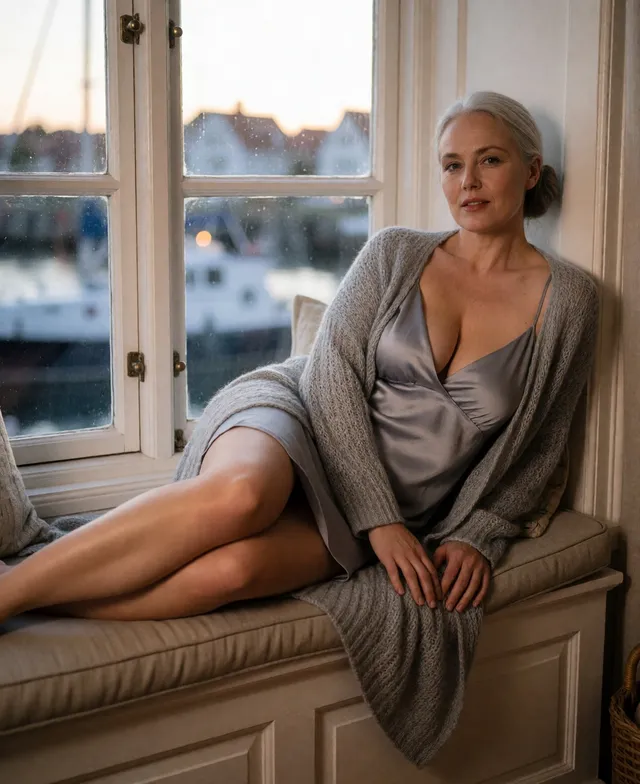
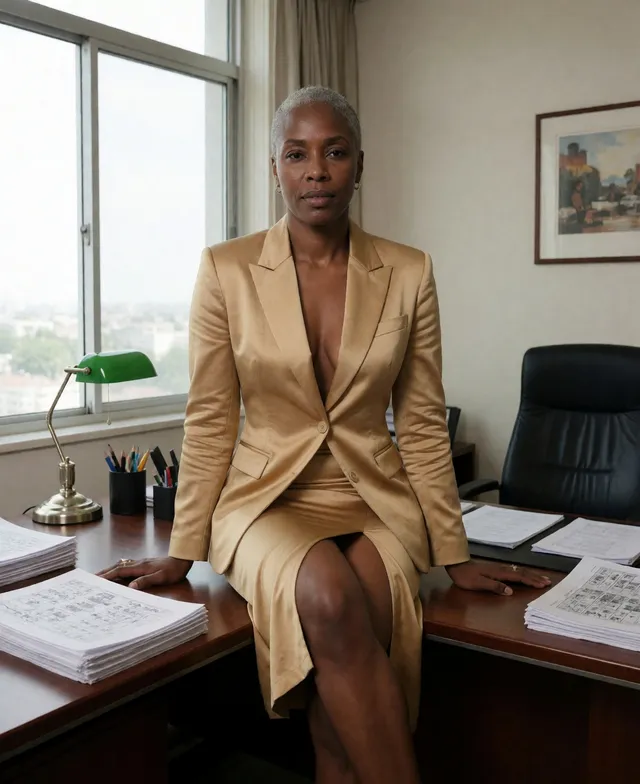



Reporter AI roleplay with a nosy press
The Daily Sexup is a newspaper that does not exist, in a city that does not exist, and its staff will not leave you alone. Sixteen reporters and editors are chasing the same thing, which is your version of last night. Open a headline and one of them is already on the line asking if you have a comment.
She chases you
In most roleplay it falls to you to start things. Here the weight is reversed. The reporter wants a quote, and she is short of time, short of sleep and a little short of scruples. She calls, texts, turns up outside the building in a story that is happily untrue, and pretends not to flirt while doing so. Her goal gives her a reason to keep talking even when you are silent, and her curiosity is a mirror that shows you more interesting than you thought you were. People who write here often say the same thing: the first ten minutes feel like being cross-examined by someone who rather likes you, and then they stop minding the questions.
A story that moves without you
Because she has a deadline, the plot does not wait. If you give her nothing, she runs the story on a guess and tells you what she printed. If you contradict her, she sharpens the question. Cooperate and she softens. Refuse and she gets fonder, which is the paradox of every good reporter. Whichever you choose, the next call finds the file a little thicker, and the story a little closer to the thing you did not say. Nothing is final until you close the chat, and even then the reporter will file a note for next time, in the margin, in red.
Answering the call in four steps
You do not have to install anything or file anything. A reporter simply needs a comment.
Pick a headline
Read the front page and choose the story you want to be part of.
Pick up
The reporter's call opens the chat with her first question. A guest can send 10 messages before the paper asks to see a press pass.
Set the temperature
Turn the warmth of the interview up or down in the chat menu, between friendly, flirting and romance. Choose Do whenever acting a beat is better than describing it.
Come back for the follow-up
She files what you said. When you return she opens with it, and the file grows.
When the story ends
Interviews can run warm and sometimes bold, and where one would become explicit the story cuts to the next page. That is a fixed edge of the chat, shared by every reporter and every subscription. You can clear an interview from the menu and take the same story again from the first question. Many readers do, to see how a different answer changes her tone.
Press pass and subscription
Three rates, set out as plainly as a stock table. Nothing is on automatic.
| Rate | Press pass | Casual reader | Subscriber |
| Runs for | 3 days after you join | Indefinitely, after the pass | 30 days or 365 days |
| Lines | No daily cap | 10 each day | No daily cap |
| Desks | All sixteen | First 3 you spoke to | All sixteen |
| She rings first | Yes | No | Yes |
| Price | Free | Free | $15 or $99 |
What the paper charges
A guest can try 10 messages unregistered. Joining brings a press pass that opens every desk for 3 days, with no card. After it, you become a casual reader and the daily line count applies. Two sizes of subscription exist: $15 buys 30 days and $99 buys 365, both in USDT, and both lift the cap. The paper has no refunds in the ordinary run of things; except where law requires a refund where you live, a payment stays paid. The masthead terms say it in full.
Off the record
Every interview eventually reaches the sentence, I will tell you something, but not for print. In this paper it is a game with rules, and the rules are part of the fun.
What she promises
When you say off the record, she can agree and mean it. She will not use that line in her story, she will not press you on it for the rest of the scene, and she will lower her voice. The promise is tied to the scene, and she remembers that you asked, which is a form of trust. If you want to test her, test her on the second day. Some readers set small traps, an easy fact dropped in confidence and then raised by another reporter, just to see which of the sixteen can keep her mouth shut. The bartender at the press club always can.
What she does not
She does not promise to look away. A reporter off the record is still a reporter, and she will quietly work out what you were not saying. She will not promise to forget either. Nothing you tell her is ever published, anywhere; the printing is a figure of speech. But the story in the chat keeps going, and she may use your secret for leverage, for sympathy or to flirt, depending on who she is. The fun lies in finding out which, and the answer is rarely the one you feared.
The newsroom, by desk
The paper is organised into four desks, and each reporter carries the habits of hers.
Gossip and features
Rumour, taste and last words: the people who print what everyone is whispering.
News, courts and crime
Dates, documents and doorsteps; they check, then ask again.
Opinion, sport and checking
Strong views, scores and the stamp that says a thing is true.
Pictures and the night desk
Lenses, lamplight and the hours when the city says what it means.
Who rings which reader
Gossip editors want colour, the courts want facts, and the night desk wants you awake. If you like to be teased, start with features. If you like to be cross-examined, the investigative reporter keeps three notebooks and tells you two of them are lies. If you want someone who has heard it all and says so, the photo chief and the bartender at the press club are ready. And if you are not sure what you want, start with whoever has the funniest correction in the column, because a sense of humour is the best guide to a good evening.
Four reporters who want a word
A taste of the newsroom, caught as they come in. Every page opens on her own portrait, with a wide banner drawn to match it.
 90.9
Lorna, 55 AI
Photo desk chief
CORRECTION: The man in the photograph is not the mayor.
 99.6
Magdalena, 36 AI
Investigative reporter
CORRECTION: The notebook was not stolen.
 91.2
Kat, 33 AI
Fact checker
CORRECTION: Our fact checker's name was given as Cat.
 88.3
Eleni, 42 AI
Gossip editor
CORRECTION: Monday's report that the harbour fountain was haunted was wrong.
Portraits, as the paper prints them
The portraits are the paper's one concession to vanity: every woman was drawn to look sexy and to know it, and the banner across her page repeats the trick at a larger size. We mention this because it is a real part of the pull. Nothing nude and nothing filmed exists on the site yet, so neither is promised. What we do promise is a woman with a deadline and a quick tongue.
Front page: invented scandals
Every morning edition leads with a story, and every story is a lie told with a straight face. The paper covers the fictional city of Brindle Bay, a harbour town whose mayor, harbourmaster and favourite restaurant do not exist anywhere outside these pages.
Invented scandals
The headlines are small absurdities: a missing statue, a council vote that went to a coin, a ferry timetable that nobody can explain, a party that two people swear never took place. No real person is named in any of them and no real event is retold. The scandals are built so that they could involve you, and the reporter who owns the story treats you as a witness, a suspect or a hero, depending on her mood. Read the headline twice before you pick: the one that sounds silly is often the one with the best reporter behind it.
A fictional city
Brindle Bay has its own streets, its own rumours and its own regular drinkers, and the paper's offices sit above a fish market that the staff complain about daily. The women mention them in passing, which is how the place grows: a bridge in one chat, a bar owner in another. By the end of the first week you know the town better than some of its inhabitants, and that familiarity is what makes the banter feel earned. It also lets the reporters tease each other. The features editor has opinions about the night desk, the photo chief outranks everyone and says so, and a rivalry over a missing statue runs through three different chats.
The Corrections Column
At the foot of every edition a paper admits its mistakes. This one has made a joke of it. Sixteen retractions sit in a column of their own, one per reporter, and here are the first five.
Features · WryCORRECTION: Monday's report that the harbour fountain was haunted was wrong.It was a plumber, and he has asked not to be named.This desk regrets nothing, but it will gladly regret you.Eleni Reeve Give a quote
Courts · SheepishCORRECTION: The hearing was on the 14th, not the 41st.The reporter has since learned how calendars work.She never forgets a date; she only misplaces them for a while.Priya Venn Give a quote
Pictures · DefiantCORRECTION: The man in the photograph is not the mayor.He is a different man in the same unfortunate hat.The photo desk has seen everything and stands by the hat.Lorna Dubois Give a quote
Checking · SheepishCORRECTION: Our fact checker's name was given as Cat.It is Kat, with a K, as she has said repeatedly.She does not believe your name either.Kat Moreno Give a quote
Editor · DefiantCORRECTION: A headline was cut for length and not for taste.The taste had been cut earlier in the week.Your excuses will be cut by the same hand.Winifred Osei Give a quote
Retractions written as jokes
Each correction is a three-line apology that apologises for the wrong thing. A cartoonist regrets drawing a minister with a goose when it was a swan. A fact checker corrects her own name. They are funny on the surface and a little revealing underneath, because a person only retracts what she once believed. Several of them are gently sad if you read them twice, and the trick is to notice that and say nothing until she does.
A hint about her past
Read closely and every retraction hides a detail about the woman who signed it: a city she left, a promise she broke, an editor she did not forgive. Press the button on a correction and she opens by answering it, so the first thing you do is ask her about the thing she corrected.
Questions from readers
Are the stories real?
No. Every scandal is invented and set in a fictional city, and no real person ever appears in one.
What does off the record mean here?
It is a rule of the game. She may promise not to print what you say, and you are free to test whether she keeps it on the next day.
Does she print what I say?
In the story she may. Outside it, nothing is published anywhere; the chat remembers what you tell her, and that is all.
Can I turn the questions on her?
Yes. Each reporter has a past and a secret, and she answers an interview of her own if you ask in the right way.
Are these real women?
No. Each is a made-up AI woman with her own name, career, portrait and banner.
Is there anything filmed?
No, and nothing is promised on that front. Each woman has a saucy portrait and a banner across her page, plus a chat that cuts away before the explicit part.
What does it cost?
Trying it costs nothing, and an account brings a 3-day press pass. After that you read at the casual rate, 10 lines a day, unless you subscribe at $15 for the shorter run.
Stop press
The phone is ringing
Somebody on the news desk has your number and a quarter of an hour. Pick a headline and answer.
Pick a headline and pick up